
Works
About
Connect

SnowPrep
Preparing snowboarders for safer, longer seasons through sport-specific knowledge and fitness

“I don’t know where to start with getting my body ready for a snowboard season. A lot of workout apps subscriptions are way too pricey and aren’t specific to the sport.”

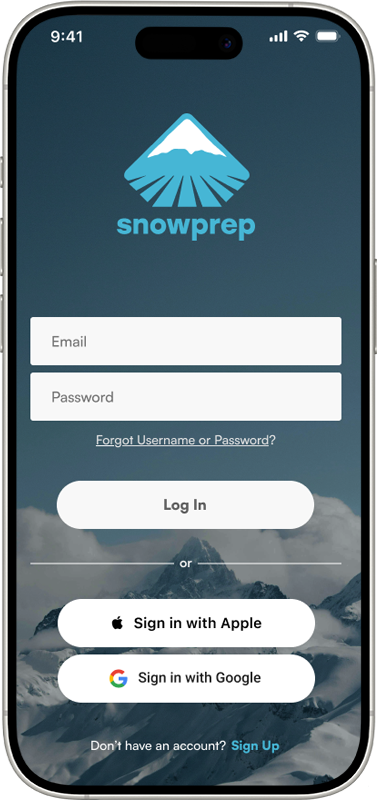
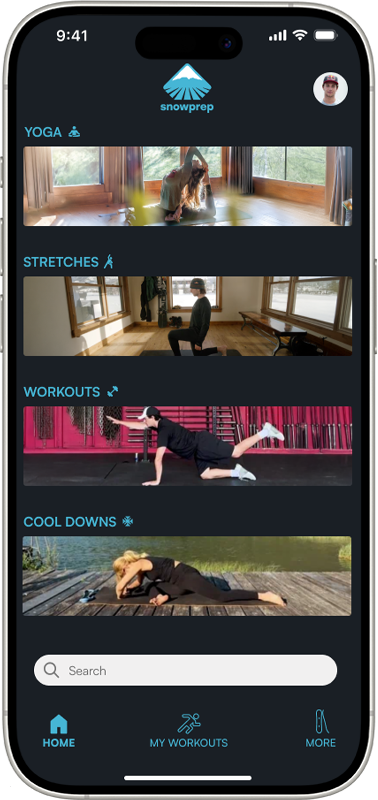
SnowPrep is a mobile MVP focused on helping snowboarders physically prepare for the demands of a snowboard season. In a crowded fitness app market dominated by general workouts, this project explores how sport-specific guidance and education can help riders train with confidence and consistency.

RoleUI/UX Designer
PlatformMobile (MVP)
Duration1 month
ScopeResearch
Information Architecture
Visual Design
Prototype


Identifying a Gap in a Crowded Fitness Market
Preparing for a snowboard season often means figuring things out alone. Snowboarders preparing for the season are often forced to rely on general fitness apps. While these apps offer a wide variety of workouts, they are designed for broad audiences and rarely account for the specific physical demands of snowboarding.
Key aspects of riding, such as balance, endurance, stability, and injury prevention, are often overlooked or buried within generic workout programs. As a result, snowboarders lack clear guidance on how to physically prepare for riding safely and effectively.
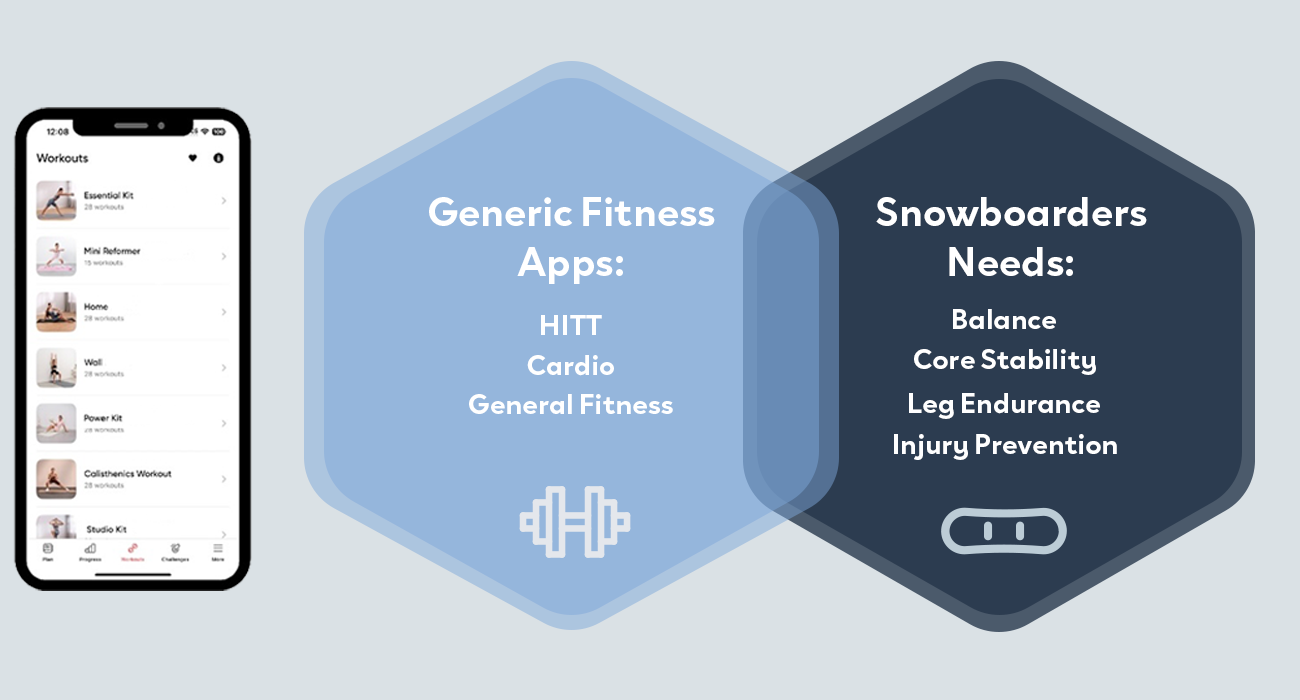
A plethora of fitness apps, but very few dedicated to a specific sport. This means you have to learn what you need then find it among all these apps.

Guiding Snowboarders to Specifics
To better understand the issue, I conducted a competitive analysis comparing Spotify with Apple Music, YouTube Music, and Amazon Music.
I tracked how frequently home screens refreshed and how long personalized sections remained stable.
Key observation:
- Spotify refreshed recommendations significantly faster than competitors
Other platforms allowed users more time with recommendations before reshuffling them. This discovery highlighted a design opportunity to create a slower, more deliberate experience.
App Store reviews reinforced this insight. Users expressed a desire to move at their own pace rather than constantly keeping up with shifting playlists.
The issue wasn’t content volume, it was timing.Below shows an example of this. After having the app open for awhile, when I went back to choose a different playlist, four seconds later, everything shifted.
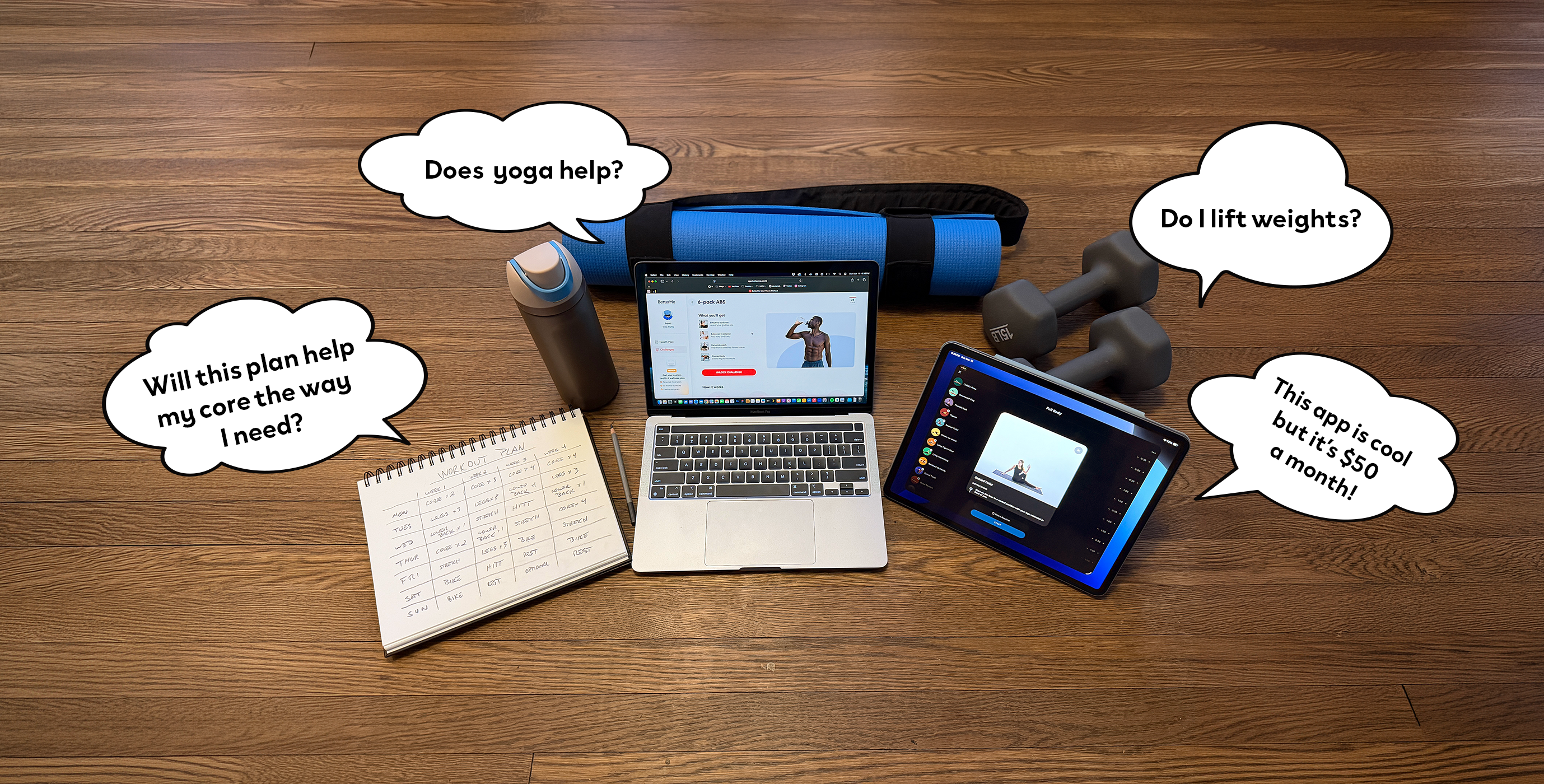
Multiple sources to find all the different workouts, but still not sure exactly what helps

Learning from Other Riders
To ground the project in real rider needs, I conducted interviews with people who snowboard recreationally, professionally, and work within the snowboard industry. These conversations helped uncover shared frustrations around learning snowboard specific workouts.
While each rider described their experience differently, their frustrations followed a similar pattern.
Across experience levels, riders expressed:
- Difficulty finding workouts designed for snowboarding
- Frustration with generic fitness advice
- A desire for clearer, more focused ways to physically prepare
These insights confirmed that riders were motivated to train, they just lacked the proper guidance.
User persona, based off interviews, to create a memorable representation of users and to begin building empathy

Translating Insights into Thoughtful Design
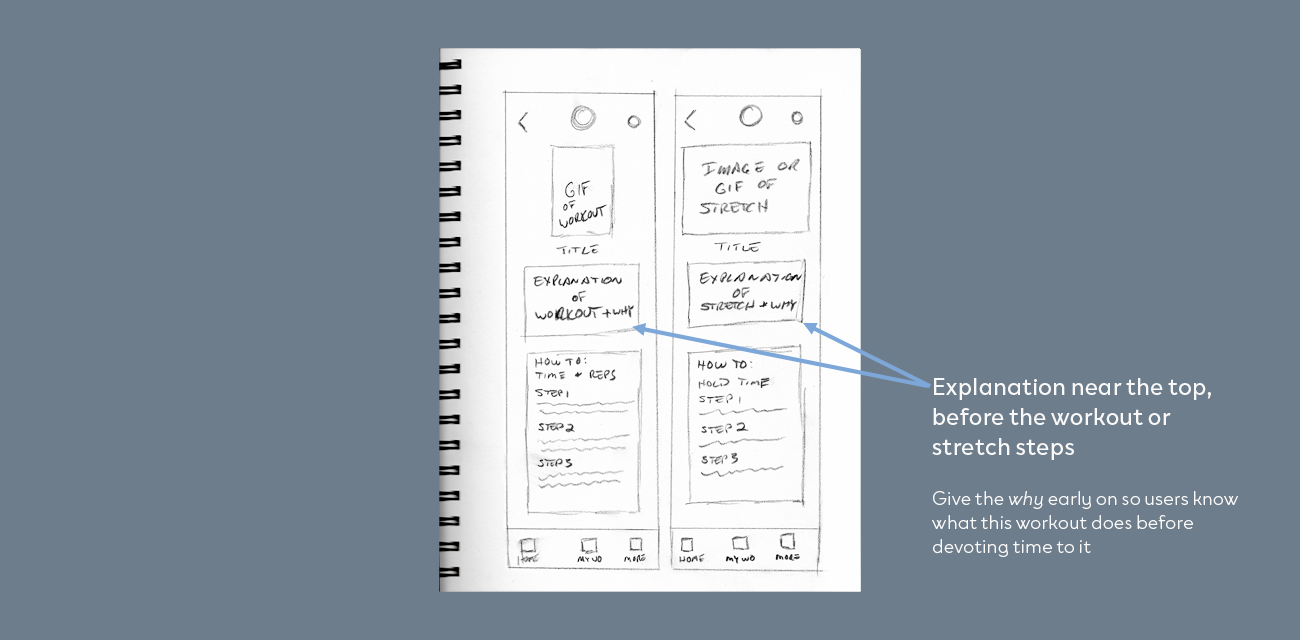
Riders didn’t just want workouts, they wanted to understand how those movements translated to riding performance.Research revealed that yoga, stretching, bodyweight workouts, and cooldowns are the most common forms of exercise among snowboarders. However, riders lacked a single space that organized these workouts.
More importantly, they lacked explanations for why these movements are beneficial for snowboarding.
These insights shaped key design decisions:
- Organizing flow of each screen with imagery, title, explanation, then how to
- Explanation before How To so user understands before performing
- Emphasizing education as part of every workout
This approach helped connect off-snow training directly to riding performance.
Plotting a Path for the User
When I was a backcountry snowboard guide, I had to plot lines down the mountain; routes that felt fun and safely got riders back to the bottom.I approached this app in a similar way. Instead of endless options, the goal was a clear path from opening the app to starting a workout.Wireframing focused on:
- Where users enter
- How they choose a workout
- How they understand what to do nextThese early sketches helped map a guided flow from home → workout selection → exercise details, reducing friction and keeping users moving.
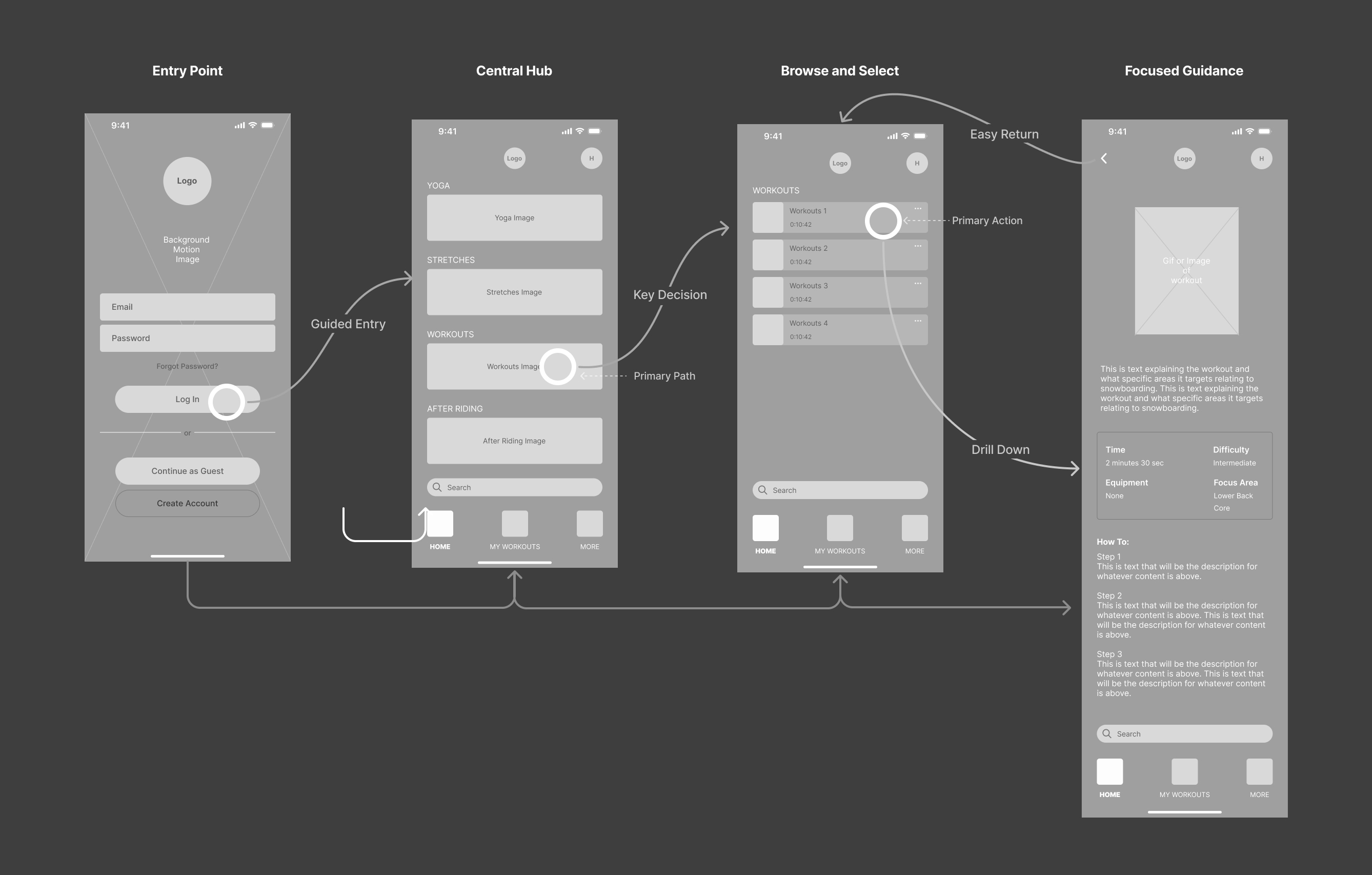
Early wireframes focused on creating a clear, simple path from entering the app to starting a workout.

Iterative User Testing to
Stomp the Landing
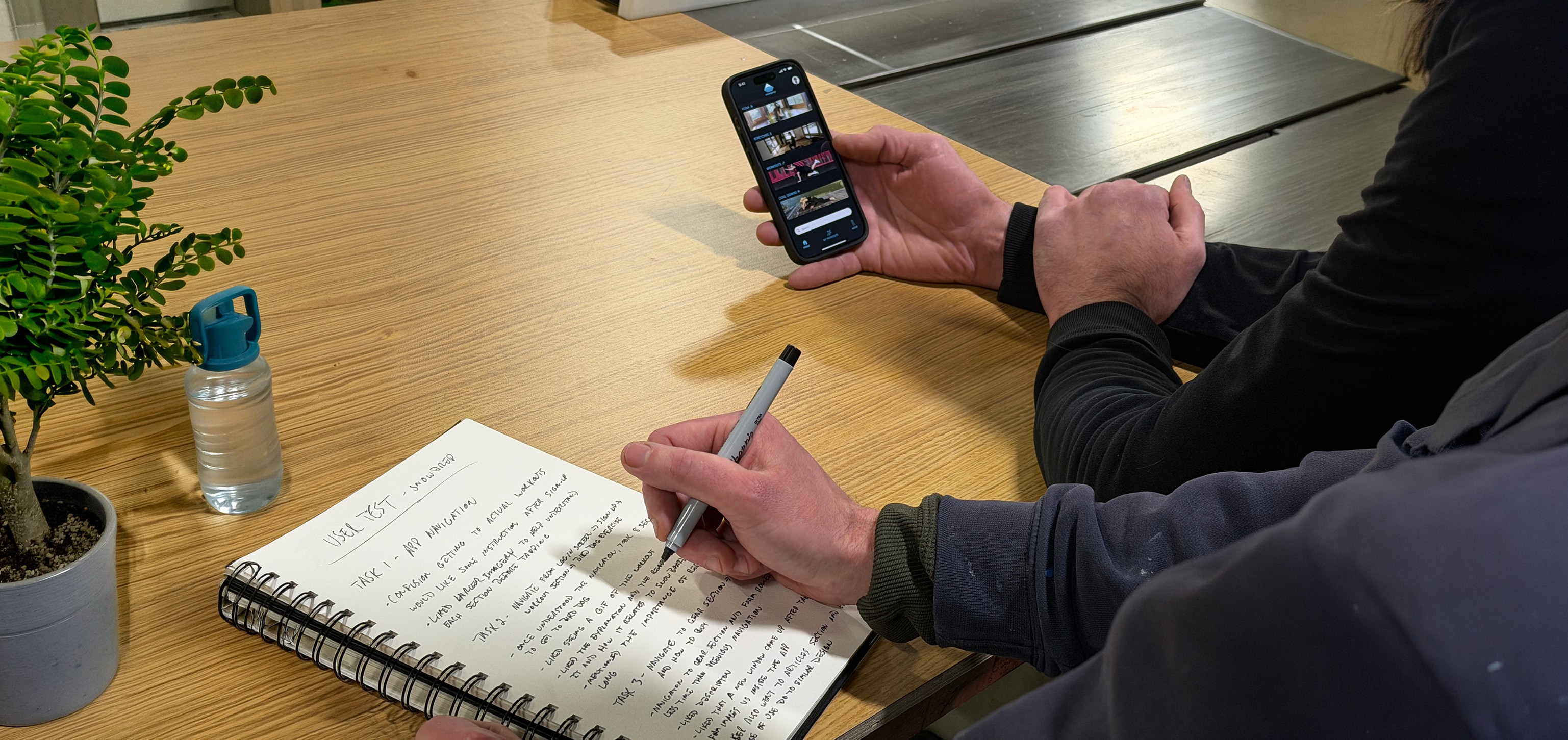
I focused testing around three key areas:
- Navigation clarity
- Workout comprehension
- Tone and language
To ensure the experience was not only usable but safe, I brought in a physical therapist.
Their expertise in injury prevention helped validate exercise guidance and identify areas where instructions needed to be clearer, more specific, or safer to follow.
This grounded the product in real-world use, not just interface design.
Designing Through Iteration
Testing directly shaped the evolution of the experience.
Key changes included:
- Adding introduction screens to better guide users into workouts after Sign Up process.
- Simplifying exercise explanations while making them more precise
- Introducing difficulty indicators to set clearer expectations
Each iteration reinforced the same principle:Clarity builds trust and trust keeps users moving forward.
Original
Lacking guidance to workouts after Sign Up screen. Difficulty level of exercises not given
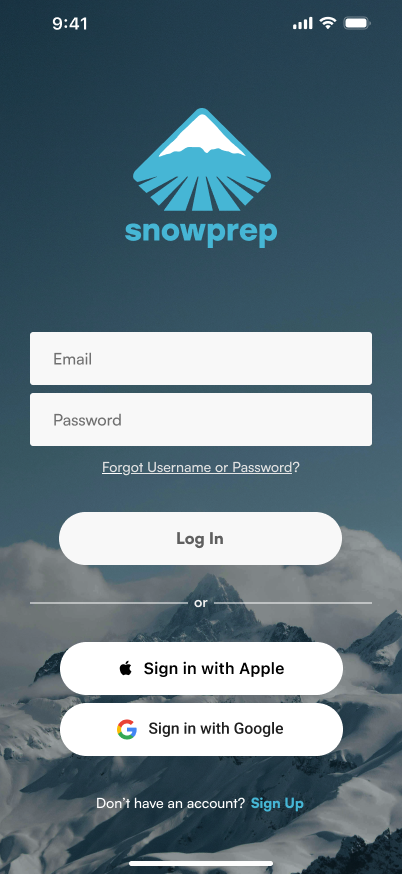
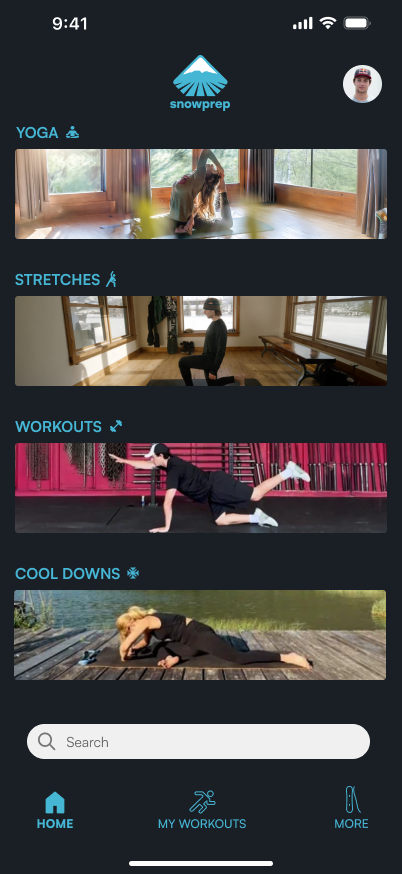
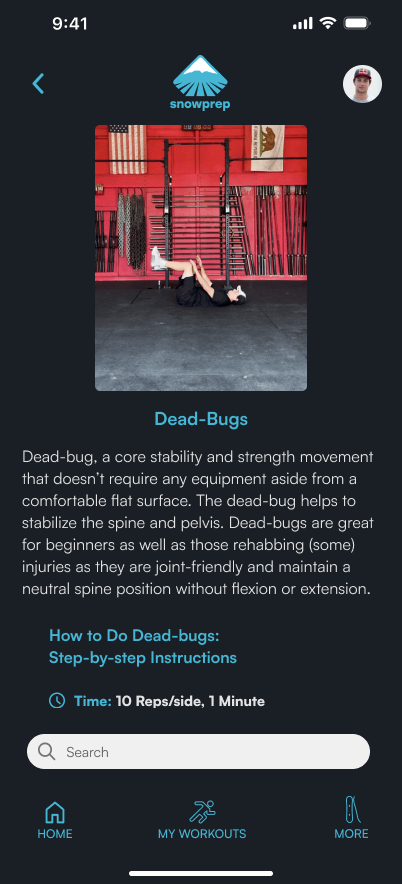
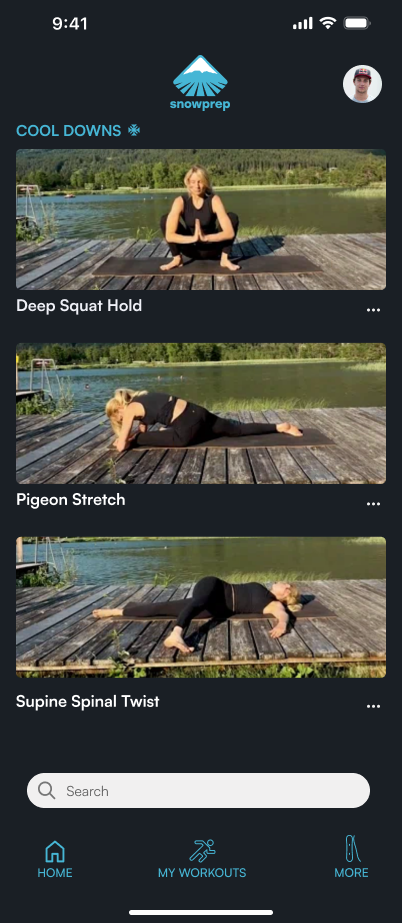
Confusion navigating
to the
workouts
No way to tell how difficult exercises are before starting them


Iterations
How to screens, added after Sign Up process. Difficulty level added to each exercise card.
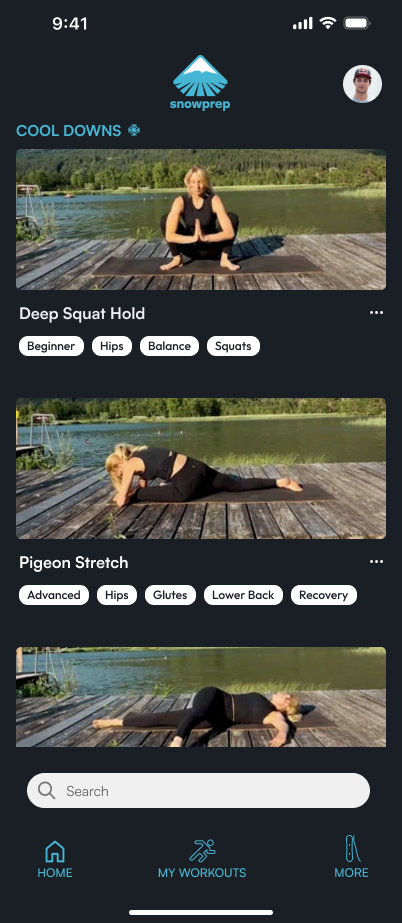
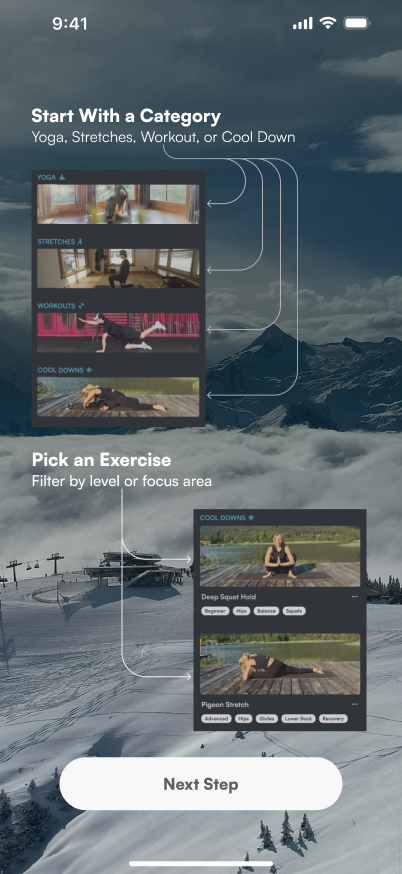
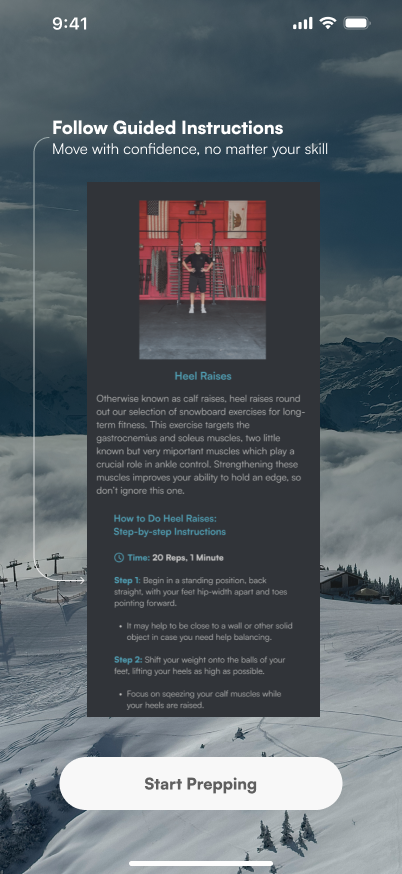
Searchable tags added under each exercise showing difficulty and what part of the body the exercise focuses on


Added two
screens showing
navigation process after Sign Up


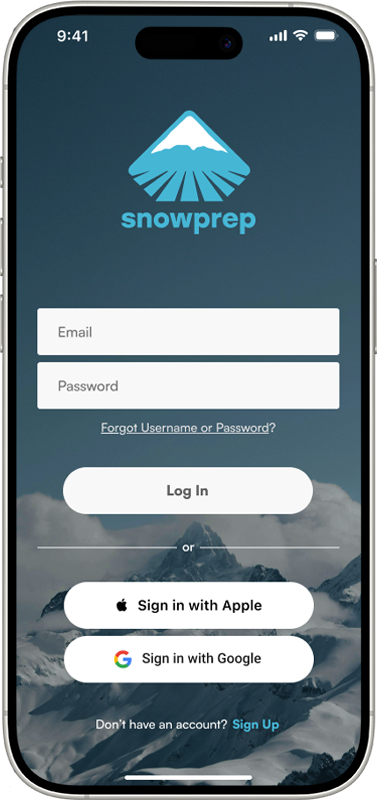
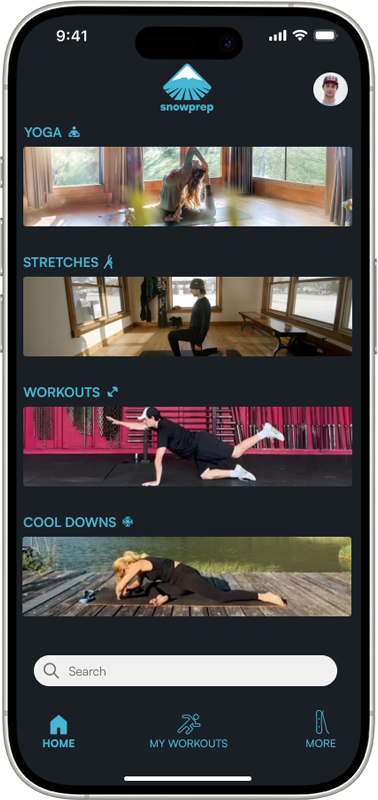
Delivering a Trusted Tool for Safer, Longer Riding
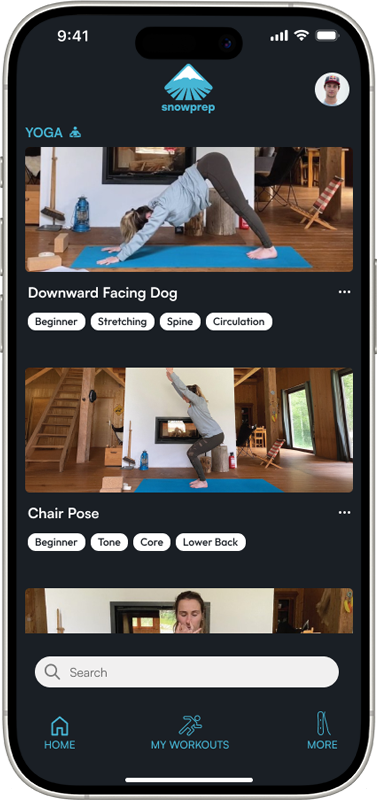
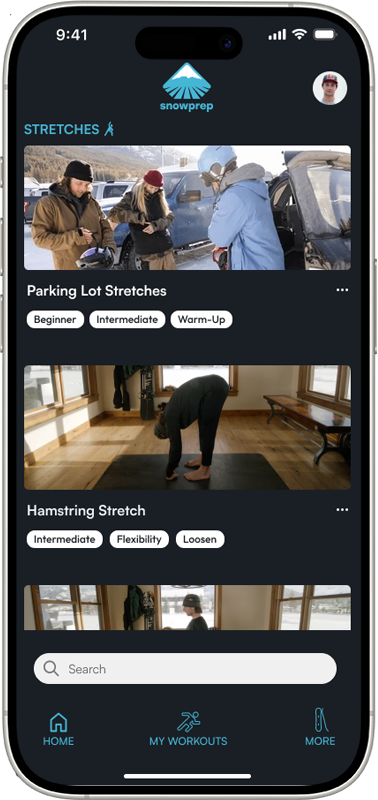
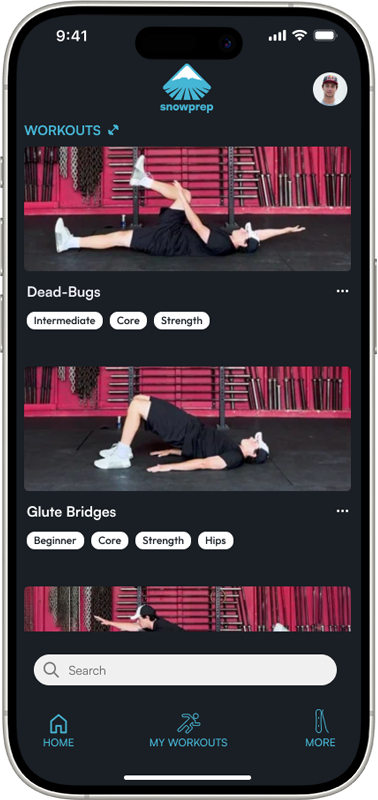
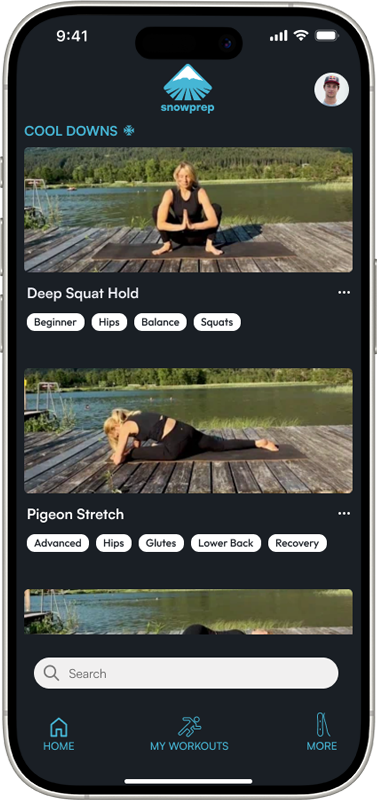
The final design delivers a focused, sport-specific preparation experience that supports snowboarders:
- Before the season, by building foundational strength and stability
- Throughout the season, by maintaining endurance and mobility
- With long-term safety and confidence on the mountain
SnowPrep combines education, structure, and usability into a single experience; positioning itself as an essential piece of a rider’s setup, carrying the same importance as their bindings.

What this Project Taught Me
Designing SnowPrep reshaped how I think about specificity in fitness products.
- Specificity builds trust faster than feature quantity
- Clear explanations can increase confidence and consistency
- Early testing helps surface usability and safety issues sooner
This project reinforced the value of designing with intention for a specific audience. By focusing on snowboard-specific preparation and resisting generic fitness patterns, SnowPrep became a product designed to earn trust over time, not through volume, but through clarity and relevance.Select instructional content and imagery used within SnowPrep were adapted from publicly available resources, including Burton Snowboards’ The Burton Blog. This project is for educational and portfolio purposes only.
In a production environment, external content would be properly licensed or replaced with original material.


Content and design © 2026 Hemi Himmler

Works
About
Connect
SnowPrep
Preparing snowboarders for safer, longer seasons through sport-specific knowledge and fitness
“I don’t know where to start with getting my body ready for a snowboard season. A lot of workout apps subscriptions are way too pricey and aren’t specific to the sport.”

SnowPrep is a mobile MVP focused on helping snowboarders physically prepare for the demands of a snowboard season. In a crowded fitness app market dominated by general workouts, this project explores how sport-specific guidance and education can help riders train with confidence and consistency.

RoleUI/UX Designer
PlatformMobile (MVP)
Duration1 month
ScopeResearch
Information Architecture
Visual Design
Prototype

Identifying a Gap in a Crowded Fitness Market
Preparing for a snowboard season often means figuring things out alone. Snowboarders preparing for the season are often forced to rely on general fitness apps. While these apps offer a wide variety of workouts, they are designed for broad audiences and rarely account for the specific physical demands of snowboarding.
Key aspects of riding, such as balance, endurance, stability, and injury prevention, are often overlooked or buried within generic workout programs. As a result, snowboarders lack clear guidance on how to physically prepare for riding safely and effectively.
A plethora of fitness apps, but very few dedicated to a specific sport. This means you have to learn what you need then find it among all these apps.

Guiding Snowboarders to Specifics
To better understand the issue, I conducted a competitive analysis comparing Spotify with Apple Music, YouTube Music, and Amazon Music.
I tracked how frequently home screens refreshed and how long personalized sections remained stable.
Key observation:
- Spotify refreshed recommendations significantly faster than competitors
Other platforms allowed users more time with recommendations before reshuffling them. This discovery highlighted a design opportunity to create a slower, more deliberate experience.
App Store reviews reinforced this insight. Users expressed a desire to move at their own pace rather than constantly keeping up with shifting playlists.
The issue wasn’t content volume, it was timing.Below shows an example of this. After having the app open for awhile, when I went back to choose a different playlist, four seconds later, everything shifted.
Multiple sources to find all the different workouts, but still not sure exactly what helps

Learning from Other Riders
To ground the project in real rider needs, I conducted interviews with people who snowboard recreationally, professionally, and work within the snowboard industry. These conversations helped uncover shared frustrations around learning snowboard specific workouts.
While each rider described their experience differently, their frustrations followed a similar pattern.
Across experience levels, riders expressed:
- Difficulty finding workouts designed for snowboarding
- Frustration with generic fitness advice
- A desire for clearer, more focused ways to physically prepare
These insights confirmed that riders were motivated to train, they just lacked the proper guidance.
User persona, based off interviews, to create a memorable representation of users and to begin building empathy

Translating Insights into Thoughtful Design
Riders didn’t just want workouts, they wanted to understand how those movements translated to riding performance.Research revealed that yoga, stretching, bodyweight workouts, and cooldowns are the most common forms of exercise among snowboarders. However, riders lacked a single space that organized these workouts.
More importantly, they lacked explanations for why these movements are beneficial for snowboarding.
These insights shaped key design decisions:
- Organizing flow of each screen with imagery, title, explanation, then how to
- Explanation before How To so user understands before performing
- Emphasizing education as part of every workout
This approach helped connect off-snow training directly to riding performance.
Plotting a Path for the User
When I was a backcountry snowboard guide, I had to plot lines down the mountain; routes that felt fun and safely got riders back to the bottom.I approached this app in a similar way. Instead of endless options, the goal was a clear path from opening the app to starting a workout.Wireframing focused on:
- Where users enter
- How they choose a workout
- How they understand what to do nextThese early sketches helped map a guided flow from home → workout selection → exercise details, reducing friction and keeping users moving.
Early wireframes focused on creating a clear, simple path from entering the app to starting a workout.

Iterative User Testing to
Stomp the Landing
I focused testing around three key areas:
- Navigation clarity
- Workout comprehension
- Tone and language
To ensure the experience was not only usable but safe, I brought in a physical therapist.
Their expertise in injury prevention helped validate exercise guidance and identify areas where instructions needed to be clearer, more specific, or safer to follow.
This grounded the product in real-world use, not just interface design.
Designing Through Iteration
Testing directly shaped the evolution of the experience.
Key changes included:
- Adding introduction screens to better guide users into workouts after Sign Up process.
- Simplifying exercise explanations while making them more precise
- Introducing difficulty indicators to set clearer expectations
Each iteration reinforced the same principle:Clarity builds trust and trust keeps users moving forward.
Original
Lacking guidance to workouts, after Sign Up screen.Difficulty level of exercises not given
Confusion navigating
to the workouts
after Sign Up
No way to tell how difficult exercises are before starting them


Iterations
How to screens added after sign up process.Difficulty level added to each exercise card.
Tags added under each exercise showing difficulty and what part of the body the exercise focuses on

Added two
screens showing
navigation process after Sign up

Delivering a Trusted Tool for Safer, Longer Riding
The final design delivers a focused, sport-specific preparation experience that supports snowboarders:
- Before the season, by building foundational strength and stability
- Throughout the season, by maintaining endurance and mobility
- With long-term safety and confidence on the mountain
SnowPrep combines education, structure, and usability into a single experience; positioning itself as an essential piece of a rider’s setup, carrying the same importance as their bindings.
What this Project
Taught Me
Designing SnowPrep reshaped how I think about specificity in fitness products.
- Specificity builds trust faster than feature quantity
- Clear explanations can increase confidence and consistency
- Early testing helps surface usability and safety issues sooner
This project reinforced the value of designing with intention for a specific audience. By focusing on snowboard-specific preparation and resisting generic fitness patterns, SnowPrep became a product designed to earn trust over time, not through volume, but through clarity and relevance.Select instructional content and imagery used within SnowPrep were adapted from publicly available resources, including Burton Snowboards’ The Burton Blog. This project is for educational and portfolio purposes only.
In a production environment, external content would be properly licensed or replaced with original material.
Content and design © 2026 Hemi Himmler
Works
About
Connect
SnowPrep
Preparing snowboarders for safer, longer seasons through sport-specific knowledge and fitness
“I don’t know where to start with getting my body ready for a snowboard season. A lot of workout apps subscriptions are way too pricey and aren’t specific to the sport.”

When talking with riders preparing for the winter season, this uncertainty appeared repeatedly.
SnowPrep is a mobile MVP focused on helping snowboarders physically prepare for the demands of a snowboard season. In a crowded fitness app market dominated by general workouts, this project explores how sport-specific guidance and education can help riders train with confidence and consistency.

RoleUI/UX Designer
PlatformMobile (MVP)
Duration1 month
ScopeResearch
Information Architecture
Visual Design
Prototype
Identifying a Gap in a Crowded Fitness Market
Preparing for a snowboard season often means figuring things out alone. Snowboarders preparing for the season are often forced to rely on general fitness apps. While these apps offer a wide variety of workouts, they are designed for broad audiences and rarely account for the specific physical demands of snowboarding.
Key aspects of riding, such as balance, endurance, stability, and injury prevention, are often overlooked or buried within generic workout programs. As a result, snowboarders lack clear guidance on how to physically prepare for riding safely and effectively.
A plethora of fitness apps, but very few dedicated to a specific sport. This means you have to learn what you need then find it among all these apps.
Guiding Snowboarders to Specifics
Without snowboard-specific guidance, preparation often becomes fragmented and inconsistent. Many riders piece together workouts from multiple sources without knowing which exercises actually translate to better on-snow performance.
Common challenges:
- Uncertainty around which movements support riding
- Inconsistent training routines
- Reduced confidence in workout choices
This lack of direction weakens trust in the training process and makes preparation feel less intentional.
Multiple sources to find all the different workouts, but still not sure exactly what helps
Learning from Other Riders
To ground the project in real rider needs, I conducted interviews with people who snowboard recreationally, professionally, and work within the snowboard industry. These conversations helped uncover shared frustrations around learning snowboard specific workouts.
While each rider described their experience differently, their frustrations followed a similar pattern.
Across experience levels, riders expressed:
- Difficulty finding workouts designed for snowboarding
- Frustration with generic fitness advice
- A desire for clearer, more focused ways to physically prepare
These insights confirmed that riders were motivated to train, they just lacked the proper guidance.
User persona, based off interviews, to create a memorable representation of users and to begin building empathy
Translating Insights into Thoughtful Design
Riders didn’t just want workouts, they wanted to understand how those movements translated to riding performance.Research revealed that yoga, stretching, bodyweight workouts, and cooldowns are the most common forms of exercise among snowboarders. However, riders lacked a single space that organized these workouts.
More importantly, they lacked explanations for why these movements are beneficial for snowboarding.
These insights shaped key design decisions:
- Organizing flow of each screen with imagery, title, explanation, then how to
- Explanation before How To so user understands before performing
- Emphasizing education as part of every workout
This approach helped connect off-snow training directly to riding performance.
Plotting a Path for the User
When I was a backcountry snowboard guide, I had to plot lines down the mountain; routes that felt fun and safely got riders back to the bottom.I approached this app in a similar way. Instead of endless options, the goal was a clear path from opening the app to starting a workout.Wireframing focused on:
- Where users enter
- How they choose a workout
- How they understand what to do nextThese early sketches helped map a guided flow from home → workout selection → exercise details, reducing friction and keeping users moving.
Early wireframes focused on creating a clear, simple path from entering the app to starting a workout.
Iterative User Testing to
Stomp the Landing
I focused testing around three key areas:
- Navigation clarity
- Workout comprehension
- Tone and language
To ensure the experience was not only usable but safe, I brought in a physical therapist.
Their expertise in injury prevention helped validate exercise guidance and identify areas where instructions needed to be clearer, more specific, or safer to follow.
This grounded the product in real-world use, not just interface design.
Designing Through Iteration
Testing directly shaped the evolution of the experience.
Key changes included:
- Adding introduction screens to better guide users into workouts after Sign Up process.
- Simplifying exercise explanations while making them more precise
- Introducing difficulty indicators to set clearer expectations
Each iteration reinforced the same principle:Clarity builds trust and trust keeps users moving forward.
Original
Lacking guidance to workouts after Sign Up screen.Difficulty level of exercises not given.
Confusion navigating
to the workouts after Sign Up
No way to tell how difficult exercises are before starting them

Iterations
How to screens added after Sign Up screen.Difficulty level added to each exercise card.
Searchable tags added under each exercise showing difficulty and what part of the body the exercise focuses on

Added two
screens showing
navigation process after Sign Up
Delivering a Trusted Tool for Safer, Longer Riding
The final design delivers a focused, sport-specific preparation experience that supports snowboarders:
- Before the season, by building foundational strength and stability
- Throughout the season, by maintaining endurance and mobility
- With long-term safety and confidence on the mountain
SnowPrep combines education, structure, and usability into a single experience; positioning itself as an essential piece of a rider’s setup, carrying the same importance as their bindings.
What this Project Taught Me
Designing SnowPrep reshaped how I think about specificity in fitness products.
- Specificity builds trust faster than feature quantity
- Clear explanations can increase confidence and consistency
- Early testing helps surface usability and safety issues sooner
This project reinforced the value of designing with intention for a specific audience. By focusing on snowboard-specific preparation and resisting generic fitness patterns, SnowPrep became a product designed to earn trust over time, not through volume, but through clarity and relevance.Select instructional content and imagery used within SnowPrep were adapted from publicly available resources, including Burton Snowboards’ The Burton Blog. This project is for educational and portfolio purposes only.
In a production environment, external content would be properly licensed or replaced with original material.
Content and design © 2026 Hemi Himmler